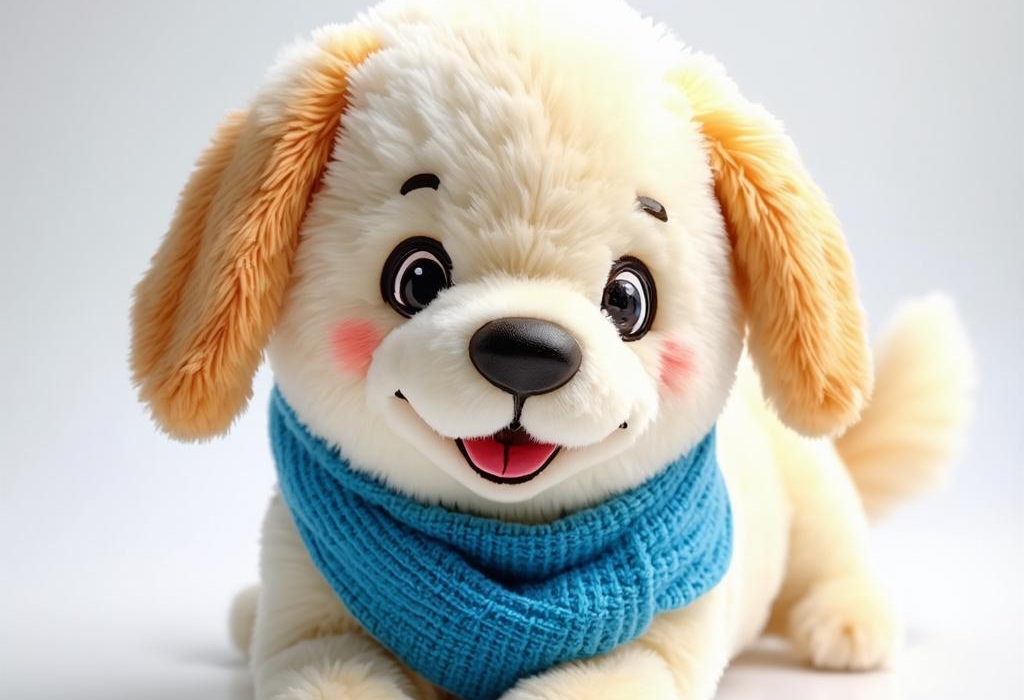
You have a character, a sketch, and a market you believe in — but between that rough drawing and a production run of ten thousand units sits an entire process most first-time buyers underestimate. The good news? Once you understand the OEM journey, it stops being intimidating and starts being a repeatable playbook. Here is exactly how a professional custom plush manufacturing partner moves your idea from concept to container.
Step 1: Design Review and Specification
It begins with your artwork. An experienced factory reviews proportions, seam placement, fabric weights, and whether your sketch can actually be sewn at scale. They will flag embossing that will not survive washing, delicate parts that create choking hazards, and cost drivers you did not see coming. This stage exists to make your design manufacturable, not to change your vision.
Step 2: Sampling and 3D Prototyping
Next, the design becomes physical. Using 3D modeling and rapid prototyping, the factory produces a working sample in roughly 15–20 days. This is your chance to hold the toy, assess its softness, and adjust details before any real money is committed. A remote buyer should request a video walkthrough alongside the sample so they can evaluate the stitch quality up close.
Step 3: Safety Compliance and Testing
Here is the step nobody skips safely. For the US market, toys must meet ASTM F963 and CPSIA requirements; for the EU, EN71 and REACH chemical rules apply. A credible stuffed animal manufacturer will test for small parts, seam strength, and labeling compliance in a third-party lab and provide certificates you can submit at customs. Demand these reports before production — they are your defence against costly recalls or dock-side holds.
Step 4: Bulk Production and Quality Control
Once the sample is approved and certified, bulk production begins with multi-point inspections: fabric checks, stitching QC, filling density, and seam-strength testing at every stage. Good factories run inline inspections rather than waiting until the end, catching defects while they are cheap to fix rather than when the container is loaded.
Step 5: Packing, Logistics, and Delivery
Finally, products are packed to your retail spec and shipped under FOB, CIF, or DDP terms. A dependable OEM partner handles the logistics so a plush toy OEM order arrives on schedule and on spec, ready for your distribution network.
That is the whole loop: review, prototype, certify, produce, deliver. When you work with a factory that runs this process end to end in-house, you remove the riskiest unknowns from custom product development. To see how the finished result looks across a proven catalogue of safety-certified plush toys, start with a manufacturer that treats your sketch as a real product — from the very first redline to the final carton.
 EN
EN  AR
AR  DE
DE  ES
ES  FR
FR  IT
IT  RU
RU  PL
PL  CS
CS  NL
NL  FI
FI  HU
HU
Leave a Message
Have questions about this article? Leave us a message and our team will get back to you.